TDS vs Contaminants: What Actually Matters in Drinking Water?
You’ve probably seen water filter marketing that talks about TDS, total dissolved solids, as the main measure of water quality. Lower TDS means better water, the logic goes. But is that actually true? Not quite. The relationship between TDS vs contaminants is more nuanced than most filter marketing suggests, and understanding it makes you a better-informed buyer and a healthier household.
This guide cuts through the confusion and explains what TDS actually is, what it doesn’t tell you, what the actual harmful contaminants in UK drinking water are, and how to choose filtration that addresses the real problem.
What Total Dissolved Solids Actually Means
Total dissolved solids (TDS) is a measurement of the total concentration of dissolved substances in water. It’s measured in parts per million (ppm) or milligrams per liter.
When you dip a TDS meter into a glass of water, it measures electrical conductivity, because dissolved minerals and compounds conduct electricity. A higher reading means more dissolved material in the water.
That’s essentially all a TDS meter tells you.
It doesn’t tell you what those dissolved solids are. It doesn’t distinguish between dissolved calcium from natural rock formations and dissolved lead from old pipes. It doesn’t identify bacteria, viruses, or chemical compounds that may be present in low concentrations.
A glass of water with dissolved calcium, magnesium, and trace minerals might show a TDS reading of 300 ppm and be perfectly healthy to drink. A glass of water with dissolved lead or other contaminants might show a TDS of 50 ppm and be genuinely harmful.
This is the most important thing to understand about TDS: it’s a quantity measurement, not a quality measurement.
UK Drinking Water Quality Standards: What Regulations Actually Cover
UK tap water is regulated by the Drinking Water Inspectorate (DWI), which enforces water quality standards under UK law. These standards set maximum permissible concentrations for a range of chemical and biological contaminants.
UK water quality in general meets these regulatory standards. UK tap water is among the better-regulated in the world.
But “meets regulatory standards” doesn’t mean “contains nothing you’d want to filter out.” It means the concentrations of regulated substances are below the levels at which regulatory bodies have determined health risks are significant.
There are things to understand about how these standards work:
Maximum contaminant levels are established at conservative thresholds, meaning they’re set below levels where harm is clearly demonstrated. But “below the limit” doesn’t mean “zero.”
Not all potentially harmful substances have established limits. Emerging contaminants, including certain pharmaceuticals, microplastics, and some industrial chemicals, are not all covered by current UK water quality standards.
Local infrastructure matters. UK water leaving treatment plants meets quality standards. What happens between the treatment plant and your tap depends on the age and condition of the distribution network and your own household plumbing. Lead pipes, for example, are a known source of lead contamination in UK drinking water and are more common in older properties.
Harmful Contaminants vs Minerals: Understanding What’s Actually in Your Water
This is where the TDS vs contaminants question gets genuinely useful.
Minerals (generally beneficial or neutral):
The dissolved solids that contribute to TDS in most UK tap water are primarily minerals: calcium, magnesium, bicarbonates, sodium, and potassium. These are the same minerals found in spring water, and at moderate concentrations they’re not harmful.
In fact, calcium and magnesium in drinking water contribute to daily mineral intake. Some research suggests that magnesium-rich water may have cardiovascular health benefits, though the nutritional contribution from water is smaller than from food.
The downside of high mineral content is practical rather than health-based: limescale on appliances, kettle buildup, and a taste profile that some people find unpleasant.
Contaminants (the ones worth filtering):
This is where the real water quality concern lies.
Lead: Lead enters drinking water primarily from lead service pipes, lead-containing solder, and brass fittings in older plumbing. UK homes built before 1970, and many built between 1970 and 1987, may have lead in their plumbing. Lead has no safe level of consumption, and children are particularly vulnerable to its health effects.
Chlorine and chloramines: Added during treatment for disinfection and present in finished tap water across the UK. Effective at killing pathogens but associated with taste and odor issues. There is also ongoing research into disinfection byproducts (compounds formed when chlorine reacts with organic matter) and their long-term health implications.
Nitrates: Elevated nitrate levels in some UK areas are linked to agricultural runoff. High nitrate concentrations are particularly concerning for infants.
Pesticide residues: Agricultural areas can have trace pesticide contamination in groundwater that feeds into water supplies. UK standards regulate many pesticide compounds, but trace levels can remain.
Microplastics: An emerging concern in UK drinking water. Research is ongoing, regulatory standards are not yet fully established, and the long-term health implications are not fully understood.
Pharmaceutical compounds: Trace amounts of pharmaceuticals from human excretion and industrial sources can persist through wastewater treatment and appear in finished tap water at very low concentrations.
The Health Impact of TDS: What the Research Actually Says
The health impact of TDS in drinking water is a genuinely complex topic, and it’s worth being straightforward about what research does and doesn’t show.
Very low TDS water (under 50 ppm): Some research suggests that extremely low TDS water, like water produced by high-performance reverse osmosis without remineralization, may leach minerals from the body or taste flat in ways that affect hydration habits. The World Health Organization has noted that very low mineral content water may have implications for daily mineral balance, though dietary intake of minerals from food is far larger than from water for most people.
Moderate TDS from minerals (100-300 ppm): Generally considered neutral to beneficial, depending on the mineral composition. This is the range of many natural spring waters.
High TDS from industrial or agricultural contamination: Potentially harmful depending on the specific substances involved. TDS from lead, nitrates, or industrial chemicals at elevated concentrations is genuinely concerning.
The key takeaway is that TDS alone is not the relevant health metric. The composition of the dissolved solids matters.
What RO Filtration Benefits Look Like in the UK Context
Reverse osmosis is the most comprehensive water purification technology available for home use. Understanding what it does helps you decide whether it addresses your specific concerns.
RO filtration benefits in a UK context include:
Lead removal: A quality RO system reduces dissolved lead. For UK households in older properties with potential lead plumbing, this is a significant benefit.
Chlorine and byproduct removal: RO combined with carbon pre-filtration reduces chlorine, chloramines, and many disinfection byproducts.
Nitrate reduction: RO membranes are effective at reducing nitrate concentrations, relevant for households in agricultural areas.
Pesticide and chemical reduction: Many organic chemicals and pesticide residues are reduced by RO filtration, though effectiveness varies by compound.
Microplastic removal: RO membranes’ microscopic pore structure is effective at blocking microplastics.
High TDS reduction: RO removes the dissolved minerals that contribute to high TDS readings, reducing limescale and improving taste for households in hard water areas.
The tradeoff is that RO also removes beneficial minerals. This is why quality multi-stage systems often include a remineralization stage that reintroduces calcium and magnesium after the RO process.
This is particularly important in advanced systems, where mineral balancing (often referred to as alkaline boost) is used to improve both taste and overall water quality after purification.
Beyond Basic RO: What Modern Filtration Systems Add
Traditional reverse osmosis systems focus on removing contaminants. But modern filtration systems are designed to go further. They address not just purity, but usability, monitoring, and water quality balance.
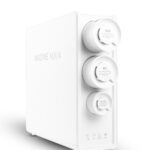
Advanced systems, such as Nadine Aqua’s 11-stage filtration technology, combine:
- Multi-layer filtration for deeper contaminant removal
- Alkaline or mineral balancing stages to improve taste and restore beneficial minerals
- Smart digital monitoring to give real-time insight
Nadine Aqua’s smart digital faucet allows you to:
- View real-time TDS levels directly from your tap
- Track filter performance through filter life alerts
- Understand changes in your water quality over time
PPM Water Measurement: What Numbers Mean in Practice
When assessing your water quality, understanding ppm water measurement helps you interpret test results.
TDS readings:
- 0-50 ppm: Very low. Typical of distilled or high-performance RO water
- 50-150 ppm: Low. Generally considered ideal by many water quality guides
- 150-300 ppm: Moderate. Common in many UK areas, usually dominated by calcium and magnesium from chalk and limestone geology
- 300-500 ppm: Higher. Noticeably hard water, significant limescale potential
- 500+ ppm: High. Taste effects common, limescale buildup significant
Contaminant-specific thresholds (UK Drinking Water Standards):
- Lead: 10 micrograms per liter (µg/L) maximum
- Nitrates: 50 milligrams per liter (mg/L) maximum
- Chlorine: 0.5 mg/L maximum in distributed water
These specific thresholds are what actually matter for drinking water safety standards in the UK. A TDS meter cannot tell you whether any of these specific contaminants are present or near their limits.
Drinking Water Safety Standards in the UK: Gaps You Should Know About
The UK’s water quality regulatory framework is comprehensive but not all-encompassing. Here are the gaps that health-conscious households should be aware of.
Emerging contaminants: Substances like microplastics, pharmaceutical residues, and certain industrial chemicals are not fully regulated under current UK standards. This doesn’t mean they’re unregulated globally, but the science and regulatory framework for these substances is still developing.
Lead from household plumbing: UK standards measure lead at the treatment works and at point of supply, but lead from household pipes leaches between the supply point and your tap. Older UK properties, particularly those with original lead service pipes or internal lead plumbing, can have lead concentrations at the tap that exceed safe guidance even when the public supply meets standards.
Distribution network variability: Water quality can vary between areas served by different treatment works, different source waters, and different distribution network ages. Two addresses in the same city can have meaningfully different water quality profiles.
How to Assess Your UK Household’s Water Quality
Rather than relying on TDS readings alone, here’s a more comprehensive approach to understanding your household’s water quality.
Request your local water report: UK water companies are required to publish annual water quality reports. Your local supplier’s report covers regulated contaminants and provides measured concentrations. This is your starting point.
Consider your home’s age and plumbing: If your home was built before 1970, there’s a reasonable possibility of lead in the service pipe connecting your property to the mains supply. Some properties have had this replaced; many have not. A water test kit or professional test can confirm lead presence in your tap water.
Use a comprehensive water test, not just a TDS meter: TDS meters are cheap and widely available, but they tell you quantity of dissolved solids, not composition. A proper water test from an accredited laboratory measures specific contaminants including lead, nitrates, bacteria, and others.
Think about your household’s specific sensitivities: Households with infants, pregnant women, or immunocompromised individuals may want more comprehensive filtration than households of healthy adults.
In modern systems, RO is just one part of a broader multi-stage process that includes post-treatment, mineral balancing, and in some cases, real-time monitoring of water quality.
At Nadine Aqua UK, our 11-stage advanced filtration systems are designed for UK household water quality conditions. These systems combine deep purification, alkaline mineral balancing, and smart digital monitoring so you can both improve and understand your water quality.
Conclusion: Stop Fixating on TDS and Start Thinking About What’s Actually in Your Water
TDS vs contaminants is not a competition. They’re two different things, and conflating them leads to misguided purchasing decisions and a false sense of either security or alarm.
Your TDS reading tells you how much dissolved material is in your water. It tells you almost nothing about whether that dissolved material is harmful or beneficial.
The right approach is to understand your specific local water quality, know the age and condition of your household plumbing, and choose filtration that addresses the contaminants you’re actually concerned about.
For households looking beyond basic filtration and wanting both purification and visibility into water quality, advanced multi-stage systems by Nadine Aqua offer a more complete solution.
Contact us to discuss your water quality concerns and find the right filtration solution for your home.
FAQs
Q: If TDS doesn’t show water safety, why do some systems display it?
TDS readings don’t identify specific contaminants, but they provide a useful indicator of overall dissolved solids. In advanced systems, real-time TDS monitoring helps you track changes in water quality and filter performance over time, rather than relying on a single reading.
Q: What is an alkaline boost in a water filtration system?
An alkaline boost (or mineral balancing stage) reintroduces beneficial minerals such as calcium and magnesium after the reverse osmosis process. This improves taste and helps restore a more natural mineral profile to purified water.
Q: How does a smart faucet improve water filtration?
Smart faucets provide real-time information about your water, including TDS levels and filter life status. This helps ensure your system is working effectively and alerts you when maintenance is needed, improving both safety and convenience.
Q: Is an 11-stage filtration system necessary for UK homes?
While not mandatory, advanced multi-stage systems provide broader protection by addressing contaminants, improving taste, and offering additional features like monitoring and mineral balancing. They are particularly useful for households looking for a more complete and reliable solution.
Q: Does reverse osmosis remove everything from water?
RO removes a wide range of contaminants, including dissolved solids, heavy metals, and chemicals. However, modern systems go further by adding post-treatment stages to improve taste, restore minerals, and ensure consistent water quality.