Best Water Filters for Small UK Kitchens (Compact and Space-Saving Options)
Small kitchens are a reality for a huge number of people in the UK.
Whether you’re in a London flat, a city centre apartment, or a smaller terraced house, kitchen space is limited. Under-sink storage is precious. And anything that takes up too much room quickly becomes a problem.
That’s why many people in the UK assume a proper home water filter isn’t an option for them. They think it’ll take over the cupboard under the sink or require some kind of major installation.
It doesn’t have to.
In this blog, we’ll cover:
- Why traditional water filters don’t work well in small UK kitchens
- The types of compact water filter options available
- What to look for when choosing a space-saving water purifier in the UK
- Why a tankless under-sink RO system is the best option for most small kitchens
- How Nadine Aqua fits into compact UK kitchen spaces
The Problem with Traditional Water Filters in Small Kitchens
Most people’s first experience with a home water filter is a jug filter. Something like a Brita or a similar brand. You fill it up, it sits in the fridge, and it filters your water slowly.
Jug filters are convenient for one person. But for a household, they’re slow, they take up fridge shelf space, and you have to remember to refill them constantly. They also only reduce chlorine and some heavy metals. They don’t handle PFAS, microplastics, bacteria, or limescale minerals properly.
The next step up is usually a countertop filter. These sit on your worktop, connect to your tap, and filter water as it flows through. Better than a jug. But in a small UK kitchen, worktop space is even more valuable than floor space. A countertop unit adds clutter to an already tight workspace.
Traditional under-sink RO systems solve the countertop problem, but they often create a new one. A standard bulky RO unit with a pressurised storage tank and multiple separate filter canisters take up most or all of a standard UK under-sink cabinet. If your cabinet is already home to your bin, cleaning products, and a few pots, there’s simply no room.
This is where compact, tankless under-sink systems change things.
Types of Compact Water Filters for Small UK Kitchens
There are a few realistic options for small kitchens. Here’s how they compare.
Jug Filters
Inexpensive. Easy to set up. But slow, limited filtration, and they take up fridge space. Not ideal for a family or for anyone who wants genuinely clean water.
Countertop Filters
Better filtration than jugs in many cases. But they sit on your worktop permanently and typically use only carbon or ceramic stages. Not as thorough as RO.
Standard Under-Sink RO Systems (with tank)
Thorough filtration but large footprint. The pressurised storage tank alone is typically 10 to 15 litres in volume. Not practical for tight cabinet spaces.
Compact Tankless Under-Sink RO Systems
The most practical solution for small kitchens. These systems remove the storage tank entirely, filter water on demand in real time, and use a composite filter design that dramatically reduces the physical size of the unit. They deliver the same or better water quality as traditional RO systems in a fraction of the space.
For most small UK kitchens, a compact under-sink water filter in the UK using tankless RO technology is the best balance of performance and practicality.
What to Look for in a Space-Saving Water Purifier in the UK
If you’re shopping for a compact water filter for a small kitchen, keep these factors in mind.
Physical Dimensions
Check the actual measurements of the unit. Some brands advertise “compact” systems that are still quite large. A genuinely compact system should fit comfortably in a standard 600 mm UK under-sink cabinet alongside your other storage.
Tankless vs. Tank
Tankless systems save the most space. A pressurised storage tank adds bulk and takes up significant cabinet space. A true tankless system has no tank at all and filters water in real time.
Filtration Quality
Small size should not mean poor performance. Look for systems with multiple filtration stages, ideally including RO membrane, UV sterilisation, and remineralisation. A compact system that only uses carbon filtration misses a lot of what you’re trying to remove.
Flow Rate
Traditional RO systems are slow because they rely on pre-filling a tank. Tankless systems with modern membranes can deliver much faster flow rates, often 400 to 1,000 GPD (gallons per day). For practical daily use, a faster flow rate makes the system feel more like a normal tap.
Installation Requirements
In a small kitchen, a system that requires significant plumbing work or structural changes is not practical. Look for systems that connect to your existing cold water supply under the sink with minimal modification and include a dedicated faucet that mounts to your sink or worktop with a small drill hole.
Certifications
Look for CE, UKCA, or NSF certification. These independent standards confirm the system actually performs as advertised.
Why a Tankless RO System Is the Best Choice for UK Flats and Apartments
UK apartments, particularly in London, often have very compact kitchens. Cabinet space under the sink might be only 40 to 50 cm wide and shared with plumbing pipes already taking up room.
A tankless RO system solves this in a few ways.
No Storage Tank
The biggest space-saving decision. Traditional RO tanks are roughly the size of a large football. Remove the tank and you instantly free up the majority of the under-sink space.
Composite Filter Design
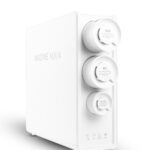
Modern compact RO systems combine multiple filter stages into a single, slim composite cartridge rather than using several large separate housings connected by tubing. This dramatically reduces the footprint of the entire system.
Faster Water Delivery
As there’s no tank to pre-fill, water flows directly from the filtration system to your tap on demand. You don’t wait for the tank to pressurise. You just turn on the dedicated faucet and water flows.
Better Hygiene
Water stored in a pressurised tank can sit for hours or days before you use it. In a tankless system, every glass of water is filtered fresh in real time. There’s no storage period during which bacteria could potentially grow.
How Nadine Aqua Fits Into Small UK Kitchens
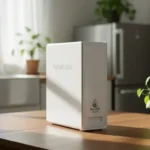
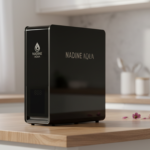
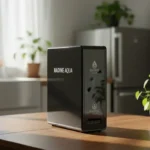
Nadine Aqua builds compact, tankless RO systems specifically designed for modern UK homes, including flats and smaller properties.
Their systems save over 70% of under-sink space compared to traditional RO units. That’s not a vague claim. It reflects the real difference between a bulky tank-based system and Nadine Aqua’s slim composite design.
Here’s what you get in that compact footprint:
10 to 11 Filtration Stages
10 to 11 filtration stages including sediment removal, multiple carbon stages, the RO membrane, UV sterilisation, and alkaline remineralisation. Full filtration in a small package.
Flow Rates up to 1,000 GPD
Flow rates up to 1,000 GPD depending on the model. That means instant water at the turn of the tap, not the slow drip of an older RO system.
Smart Digital Faucet
Smart digital faucet on Pro models. This small faucet sits on your sink and displays your water’s TDS reading in real time. It also tracks filter life so you know when maintenance is due.
Certifications
CE, UKCA, and NSF certified. Independently verified performance standards.
Straightforward Installation
Nadine Aqua systems connect to your existing cold water supply under the sink. No specialist tools required. Everything you need comes in the box.
Nadine Aqua Models and Which Suits Small UK Kitchens
Nadine Aqua offers several models. Here’s a quick overview to help you find the right fit.
NAQ-M8 (£449): 11-stage filtration, tankless design, digital faucet, fast flow. A solid all-round option for most small UK kitchens.
NAQ-M8-PRO (£570): Adds UV sterilisation to the M8’s spec. Ideal if you want the extra layer of microbial protection alongside full RO filtration.
NAQ-M10-PRO (£649): UV sterilisation, smart digital faucet, ultra-fast flow. It is great for larger households in smaller spaces that need high volume without a large footprint.
NAQ-G10-PRO (£599): 11-stage filtration with UV sterilisation, digital display, and ultra-fast flow in a compact G-Series housing.
NAQ-G8 (£499): Compact G-Series design with 11-stage filtration and fast flow. Good entry point for the G-Series range.
NAQ-P15 (£799): The top-of-range model with the highest flow rate. It is best for households with higher daily water demand in a compact kitchen footprint.
All models fit under a standard UK kitchen sink cabinet without major modification.
A Quick Checklist Before You Buy
Before choosing a compact water filter for your small UK kitchen, run through this:
- Measure your under-sink cabinet. Check width, depth, and height available after existing pipes.
- Consider your household size. A single person or couple needs less daily output than a family of four.
- Think about what you want to remove. For limescale, chlorine, and PFAS, you need RO. A basic carbon filter won’t cover all of these.
- Check whether UV sterilisation matters to you. If you have young children, elderly family members, or anyone with a compromised immune system, UV adds meaningful protection.
- Check the certifications. CE, UKCA, and NSF certification means independent verification, not just brand claims.
Final Thoughts
A small kitchen is not a barrier to clean, filtered drinking water at home.
The right compact under-sink water filter in the UK fits neatly in your cabinet, delivers fully purified water on demand, and takes up a fraction of the space that traditional RO systems need.
Nadine Aqua’s tankless, compact systems start from £449 and are built for exactly this situation
We bring 10 to 11 stages of filtration, fast flow, and a genuinely small footprint to homes and flats across the UK.
Explore the full range at Nadine Aqua and find the model that fits your kitchen.
Frequently Asked Questions
1: Can I install a Nadine Aqua system myself, or do I need a plumber?
Most people can install a Nadine Aqua system themselves. Everything you need comes in the box, with clear step-by-step instructions included.
2: Will the dedicated faucet from a Nadine Aqua system require a separate hole in my sink or worktop?
Yes. The smart faucet needs a small hole, typically 12 to 14 mm. Most UK kitchen sinks already have a spare pre-cut hole available for this purpose.
3: How often do Nadine Aqua filters need replacing, and is it something I can do myself?
Filter replacement is typically once or twice a year. The smart faucet on Pro models alerts you when it’s time, and the process is straightforward enough to do at home without a technician.