What Is the Best Way to Remove PFAS from Drinking Water?
The best way to remove PFAS (Per- and Polyfluoroalkyl Substances) from drinking water is by using a certified PFAS removal water filter that uses reverse osmosis technology.
Reverse osmosis removes up to 99% of PFAS compounds. No other widely available home filtration method comes close to that level of performance across both long-chain and short-chain PFAS.
Understanding why reverse osmosis works so well requires a closer look at what PFAS chemicals are, how PFAS enter UK water supplies, and what each filtration method actually does.
This guide covers everything UK households need to know.
What PFAS Chemicals Are and Why Scientists Call Them Forever Chemicals
PFAS stands for per- and polyfluoroalkyl substances.
PFAS is not one single chemical. PFAS is a group of over 12,000 synthetic chemical compounds, all built around a carbon-fluorine bond.
The carbon-fluorine bond is one of the strongest bonds in organic chemistry. This bond makes PFAS resistant to heat, water, oil, and biological breakdown.
The human body cannot break PFAS down. The natural environment cannot break PFAS down either.
PFAS accumulate in water sources, soil, animals, and human tissue over years and decades. This is why scientists and health researchers call PFAS “forever chemicals.”
Where PFAS Come From and How PFAS Enter UK Drinking Water
PFAS chemicals have been used in industrial and consumer products for over 80 years.
The main sources of PFAS contamination affecting UK drinking water include:
Non-stick cookware: PTFE coatings release PFAS during manufacturing and high-heat cooking.
Firefighting foam: AFFF foam used at UK airports and military bases has leached PFAS into groundwater for decades.
Food packaging: PFAS-coated wrappers and microwave packaging release PFAS into wastewater during disposal.
Waterproof textiles: Stain-resistant and waterproof clothing releases PFAS during washing and end-of-life disposal.
Industrial discharge: Manufacturing facilities using PFAS chemicals discharge PFAS into rivers and drainage systems.
Sewage sludge: When agricultural land is treated with sewage sludge that contains PFAS, PFAS can penetrate groundwater supplies.
Conventional water treatment plants cannot adequately remove PFAS. PFAS pass through standard filtration and chlorination processes and reach household taps at measurable concentrations.
How Serious Is PFAS Contamination in UK Tap Water
PFAS contamination in UK tap water is a documented and growing concern, not a theoretical risk.
The UK Drinking Water Inspectorate (DWI) introduced updated PFAS limits in 2021, setting a total PFAS concentration limit of 0.1 micrograms per litre for treated drinking water.
Environmental investigations by CHEM Trust and independent researchers have detected PFAS across multiple UK water sources.
Areas near airports, military training facilities, and industrial zones show the highest PFAS concentrations. London and the South East show higher-than-average PFAS levels due to industrial and urban water runoff entering rivers used for water abstraction.
Many independent health scientists argue that current UK regulatory limits do not adequately protect against the cumulative effects of long-term PFAS exposure.
Health Risks Linked to Long-Term PFAS Exposure Through Drinking Water
Health bodies including the World Health Organization, the US Environmental Protection Agency, and the UK Health Security Agency have published guidance on PFAS health risks based on decades of accumulated research.
Current peer-reviewed evidence links PFAS exposure to the following conditions:
Cancer: The International Agency for Research on Cancer classified PFOA as a Group 1 carcinogen in 2023, confirming PFOA causes cancer in humans. Research also links PFAS to kidney, testicular, and bladder cancers.
Immune suppression: A Michigan State University study demonstrates that PFAS exposure reduces vaccine antibody response and weakens immune function in both children and adults.
Thyroid disruption: PFAS interfere with thyroid hormone production, affecting metabolism, energy levels, and developmental health.
Reproductive harm: In a Review of Possible Underlying Mechanisms using the AOP-HelpFinder, it was found that PFAS exposure during pregnancy is linked to reduced birth weight, altered infant immune development, and hormonal disruption.
Elevated LDL cholesterol: According to a study published in ScienceDirect, elevated LDL cholesterol is consistently associated with a higher PFAS body, which increases cardiovascular disease risk.
Liver damage: A report published in the National Institute of Health links PFAS exposure to elevated liver enzymes and fatty liver changes in both animal and human studies.
PFAS accumulate in the body over a lifetime of daily exposure. Small daily doses through drinking water add up significantly over years.
The Four Methods Used to Remove PFAS from Drinking Water
Reverse Osmosis: The Most Effective Residential Method for PFAS Removal
A PFAS removal water filter using reverse osmosis forces water under pressure through a semi-permeable membrane with pores measuring 0.0001 micrometres.
PFAS molecules are far larger than water molecules. PFAS cannot pass through the RO membrane at this scale.
The result is PFAS removal rates of 90% to 99%, depending on the specific compound and membrane condition.
NSF International has independently verified that certified RO systems reduce PFOA and PFOS to below detection thresholds under NSF/ANSI 58 testing protocols.
Reverse osmosis also removes chlorine, fluoride, lead, arsenic, nitrates, bacteria, viruses, and microplastics simultaneously.
No other residential water treatment method delivers this breadth of contaminant removal alongside verified PFAS reduction at these levels.
Activated Carbon Filtration: Useful as a Pre-Filter but Not Enough on Its Own
Activated carbon filters adsorb certain PFAS compounds as water passes through the carbon media.
High-quality carbon block filters can achieve 70% to 94% removal of longer-chain PFAS compounds like PFOS and PFOA under laboratory conditions.
However, activated carbon is significantly less effective against shorter-chain PFAS compounds. Shorter-chain PFAS now dominate contamination profiles in many UK water sources following the industrial phase-out of older longer-chain compounds.
An overdue or saturated carbon filter can also release previously captured PFAS back into the water, making timely replacement essential.
Activated carbon serves as a valuable pre-filter in a multi-stage water filter for PFAS removal but is not sufficient as a standalone PFAS solution.
Ion Exchange Resins: Highly Effective but Not Practical for UK Home Use
Specialist anion exchange resins designed for PFAS removal achieve removal rates exceeding 95% for a broad range of PFAS compounds under optimal conditions.
However, residential PFAS-targeted ion exchange systems are not widely available in the UK. These systems require specialist installation, carry significantly higher costs than RO systems, and are used primarily in commercial and municipal water treatment.
Ion exchange is not a standard practical option for UK household drinking water treatment at this time.
Nanofiltration: Effective but Less Accessible Than Reverse Osmosis
Nanofiltration uses pressure-driven membrane filtration with slightly larger pore sizes than reverse osmosis, achieving PFAS removal rates of 70% to 95% for larger PFAS molecules.
Nanofiltration does not match the broad contaminant removal capability of reverse osmosis. Residential nanofiltration systems are not widely available in the UK and are generally more expensive than RO alternatives.
Nanofiltration is more commonly applied in industrial and specialist treatment settings rather than UK household use.
Why Reverse Osmosis Is the Clear Choice for UK Households Concerned About PFAS
Reverse osmosis delivers the highest independently verified PFAS removal rates across both long-chain and short-chain compounds.
A certified PFAS removal water filter using reverse osmosis is widely available in the UK, practically installable under a kitchen sink, and cost-effective for long-term home use.
For households in London, the South East, and other areas with documented PFAS contamination, a certified and properly maintained PFAS removal water filter installed under the kitchen sink is the most reliable and comprehensive protection available.
What to Look for in a PFAS Removal Water Filter for UK Homes
Not every filter marketed as a PFAS product delivers verified removal performance.
NSF/ANSI 58 or NSF/ANSI 53 certification: Independently tested and verified PFAS reduction. Non-certified systems cannot substantiate PFAS removal claims.
UKCA and CE certification: Required for water treatment products connected to UK mains water supplies.
Multi-stage filtration with a genuine RO membrane: Sediment pre-filter, carbon pre-filter, RO membrane, and post-filtration are all required for effective PFAS removal.
Dedicated PFAS filtration stage: Advanced systems include a specific PFAS-targeted stage alongside the RO membrane for additional short-chain PFAS removal capacity.
UV LED sterilisation: Eliminates bacteria and viruses, providing microbiological safety beyond chemical removal.
Tankless compact design: Removes the need for a large pressurised storage tank, fitting into the smaller under-sink spaces common in UK and London homes.
Smart filter replacement alerts: Maintains PFAS removal efficiency by ensuring filter media is never used beyond the recommended service life.
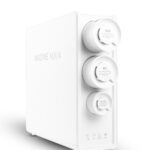
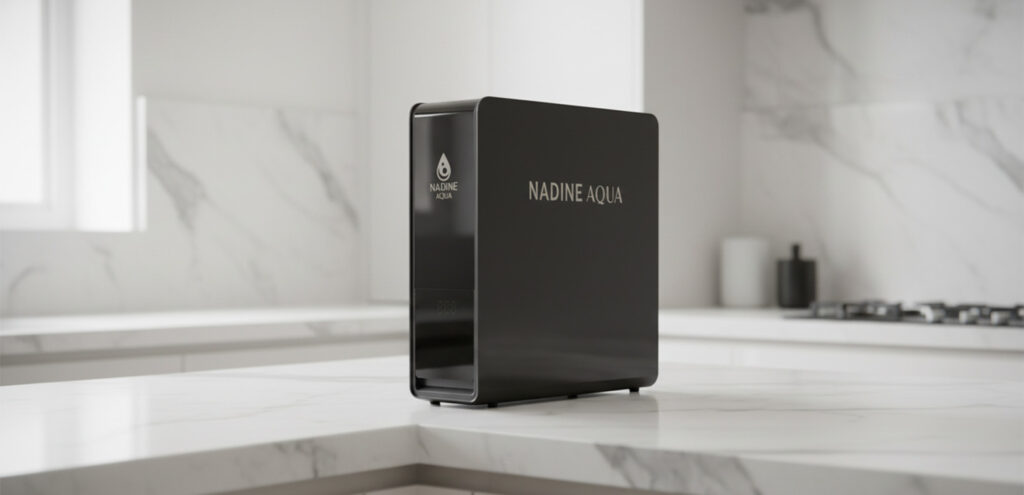
Nadine Aqua’s M-Series and G-Series systems treat PFAS water as they carry CE, UKCA, and NSF certifications and include an 11-stage filtration process with a dedicated PFAS removal stage, RO membrane, UV LED sterilisation, and mineral restoration within a compact tankless under-sink design.
How Often a PFAS Removal Water Filter Needs Replacing to Stay Effective
RO membranes require replacement every two to three years. Pre-filters including sediment and carbon stages require replacement every six to twelve months. Dedicated PFAS filtration stages require annual replacement in most systems.
An overdue carbon pre-filter can release previously captured PFAS back into filtered water. Regular maintenance is not optional. Consistent filter replacement is what separates a properly functioning PFAS removal water filter from a false sense of protection.
Nadine Aqua M-Series faucets include a real-time filter status display that alerts users when each individual filter stage requires replacement.
Frequently Asked Questions
Q1: Does boiling water remove PFAS?
No. Boiling does not break the carbon-fluorine bond in PFAS and may actually concentrate PFAS by reducing the water volume through evaporation. A certified PFAS removal water filter using reverse osmosis is the most effective method for removing PFAS from drinking water at home.
Q2: Do water filter jugs remove PFAS?
Standard jug filters remove some longer-chain PFAS but cannot remove shorter-chain PFAS compounds effectively. A certified multi-stage PFAS removal water filter using reverse osmosis is required for reliable reduction across all PFAS compound types.
Q3: How do UK households know if tap water contains PFAS?
Water quality data is available from local water suppliers. Independent laboratory water testing services offer postal kits for detailed analysis. Households near airports, military bases, or industrial sites carry the highest PFAS risk. Installing a certified PFAS removal water filter provides consistent protection regardless of specific local contamination levels.