How Does Hard Water Affect Your Kitchen Appliances and Drinking Water?
If you live in the UK, chances are you already have a strange white crust on your kettle. That’s hard water at work. The effects of hard water on kitchen appliances and drinking water go way beyond that annoying scale you scrub off the tap. It quietly shortens the life of your appliances, changes how your water tastes, and leaves you wondering if what comes out of the tap is worth drinking at all.
We hear this from UK homeowners every week. You’re not imagining things. Hard water is a real, measurable problem across most of England and large parts of the rest of the UK.
What Is Hard Water and Why Do UK Homes Have So Much of It?
Hard water simply means your tap water carries a heavy load of dissolved calcium and magnesium. Rain picks these minerals up as it moves through chalk and limestone underground. By the time it reaches your kitchen tap, it’s carrying a mineral cargo most people never think about.
Regions like London, the South East, and much of the Midlands sit on chalk and limestone beds. That geology means hard water in UK homes isn’t rare, it’s the norm for millions of households. Softer water shows up more in Scotland, Wales, and parts of the North West, where the ground is rockier and holds fewer minerals.
You can’t see hardness in a glass of water. But you can see what it leaves behind.
How Does Hard Water Damage Your Kettle, Dishwasher, and Washing Machine?
Every time hard water heats up, the calcium and magnesium inside it turn into limescale. That chalky white buildup coats heating elements inside your kettle, dishwasher, and washing machine.
Limescale doesn’t just look bad, it works against your appliances. A kettle with a scaled element takes longer to boil and uses more electricity doing it. Dishwashers with clogged spray arms leave streaks on glasses. Washing machines with scaled heating elements wear out faster and can fail years before they should.
This is one of the most common hard water effects on appliances that homeowners notice first, usually because they’re replacing a kettle every year instead of every five.
Over time, buildup narrows pipes too. Reduced water flow, longer heating cycles, and higher energy bills all trace back to the same root cause sitting quietly in your water supply.
Does Hard Water Change the Taste and Safety of Your Drinking Water?
Hard water on its own isn’t classed as a health risk by UK water authorities. That doesn’t mean it’s problem free though, especially for anyone raising hard water drinking water concerns in their own kitchen.
Many people describe hard water as tasting slightly chalky or metallic. It can make tea and coffee taste flat too, since the minerals interfere with how flavour compounds dissolve. Soap doesn’t lather properly either, which is why hands can feel dry even after washing.
There’s also the question of what else might be riding along with those minerals. Older pipework, especially in properties built before the 1970s, can add trace metals into the mix. Hard water alone won’t hurt you, but it’s rarely the only thing worth checking in your tap water.
How Can You Tell If Your Home Has a Hard Water Problem?
A few signs point to hard water almost every time. White scale around taps and shower heads is the most obvious one. Cloudy spots on glassware after washing is another.
You might notice soap that won’t lather well, or laundry that comes out feeling stiff. Kettles that need descaling every few weeks are practically a UK household tradition at this point.
If any of that sounds familiar, your postcode is probably sitting on a hard water map, and your appliances are already paying the price.
Can Filtration Fix Both Limescale and Drinking Water Quality?
Yes, and this is where things get genuinely useful for your kitchen. A proper filtration system doesn’t just soften the blow of limescale, it improves what comes out of your tap for drinking and cooking too.
We build our under-sink systems around 11-stage advanced filtration, which targets the minerals, chemicals, and trace metals that hard water often carries along with it. Reverse osmosis membranes inside our systems pull out far more than scale-forming minerals, so your water tastes cleaner and your appliances stay protected for longer.
After filtration, we add balanced minerals back in through our mineralised RO system. This keeps your water tasting fresh rather than flat, so you’re not trading one extreme for another.
How Our Systems Fit Straight into Your Existing Kitchen
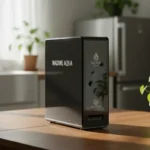
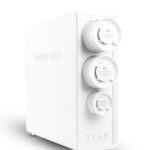
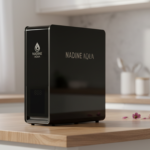
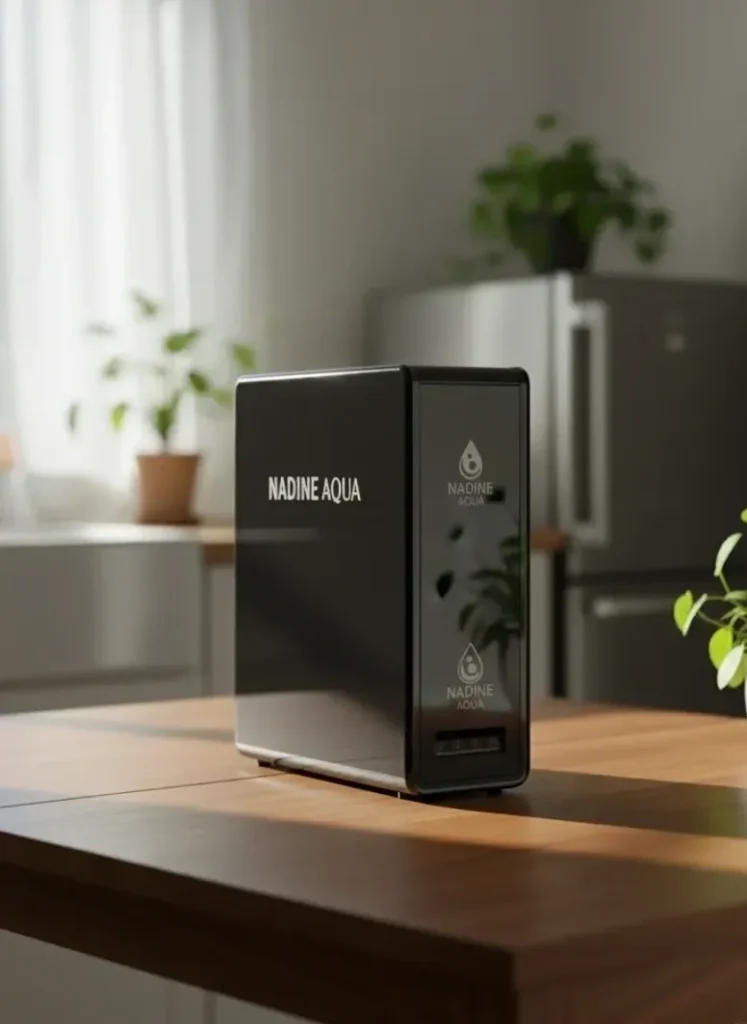
We designed every Nadine Aqua system to work inside a standard UK kitchen without a renovation. The compact design saves a huge amount of under-sink space compared to older tank systems, so it slots in without crowding your bins or cleaning supplies.
Many of our models include a UV LED water purifier, which adds a layer of protection against bacteria and viruses before water reaches your glass. Some also come with a smart faucet water filter, giving you filtered water and regular tap water from one stylish outlet with no extra drilling.
Filter changes stay simple too. Most cartridges last between 12 and 18 months, and the RO membrane typically runs for 18 to 24 months. A smart monitoring system tells you when it’s time, and swapping a cartridge takes seconds with no tools needed.
If limescale keeps eating your kettles and you’re tired of guessing what’s actually in your drinking water, filtration solves both problems at once. That’s the gap we built our systems to close for UK homes.
FAQs About Hard Water Effects on Kitchen Appliances
Does hard water actually shorten the life of a washing machine?
Yes, hard water speeds up limescale buildup on heating elements inside washing machines. This buildup forces the machine to work harder to heat water, which increases wear and raises the risk of early breakdown. Regular descaling helps, but filtering the water at the source reduces damage before it starts.
Why does my kettle need descaling so often in the UK?
UK tap water in many regions carries high levels of calcium and magnesium, especially across the South East and Midlands. Every time you boil water, these minerals settle as limescale on the heating element. Homes in harder water areas often need to descale kettles every few weeks instead of every few months.
Is hard water safe to drink even though it causes limescale?
Hard water is generally considered safe by UK health authorities, since calcium and magnesium aren’t harmful in typical amounts. Taste, texture, and older pipework can still affect water quality though. Filtration systems address both the mineral load and any other contaminants that might be present.
Can a water softener and a water filter work together?
Yes, a softener removes hardness minerals to protect appliances, while a filtration system improves drinking water quality by targeting a wider range of contaminants. Many UK homes use both, though a good under-sink RO system alone already reduces many of the issues hard water causes in the kitchen.
How do I know if my area has hard or soft water?
UK water suppliers publish hardness levels for their supply areas, usually available on their websites by postcode. Chalk and limestone regions like London and the South East generally have hard water, while Scotland, Wales, and parts of the North West tend to have softer supplies.
Does filtering my water reduce my energy bills?
Indirectly, yes. Limescale buildup forces kettles, boilers, and dishwashers to use more energy reaching the same temperature. Reducing mineral buildup through filtration helps appliances heat water more efficiently, which can lower energy use over time.