Tankless vs Traditional RO Systems: Which Is Better for UK Kitchens?
For many UK kitchens, a tankless reverse osmosis (RO) system has real practical advantages, especially when under-sink space is tight or several people drink purified water through the day. Traditional RO systems still suit some households, particularly those with lower water demand and enough room for a storage tank.
The right choice depends on more than size. Water production, filtration, wastewater, maintenance, and long-term costs all count. Here’s how the two types compare, and what to look for when you choose.
What’s the Difference Between Tankless and Traditional RO Systems?
Both types push water through a semipermeable membrane that reduces many dissolved substances and contaminants. What differs is how the purified water gets to your tap.
A traditional system stores filtered water in a pressurised tank under the sink. Open the tap and you draw from that tank, and the system ttops it up as it empties.
A tankless system filters water as it passes through the unit, with no big storage tank. It usually uses a pump to move water through the filtration stages and the RO membrane.
That one difference changes how much space you need, how water is supplied when demand is heavy, and how much the system can produce over time. Performance and running costs still depend on the design and the conditions it operates in.
How Traditional RO Water Filters in the UK Work
Traditional RO systems filter incoming water through multiple stages before storing the purified water in a pressurised tank. The stored supply gives you water on demand, but how much is available right away depends on the tank’s capacity and how fast the system refills it.
For a smaller household that doesn’t use much filtered water, that can work fine. But if several people are filling bottles, cooking, and making hot drinks, the tank can run low during the busy stretches.
The tank also needs room under the sink, on top of the filter housings and plumbing connections. In a compact kitchen, or a cupboard already holding the bins and cleaning supplies, that can make installation a squeeze.
A traditional system can still be a good choice if you have the space and like having a stored supply of purified water. What matters is whether the tank size and refill rate match how much your household actually uses each day.
How Tankless Reverse Osmosis Systems in the UK Work
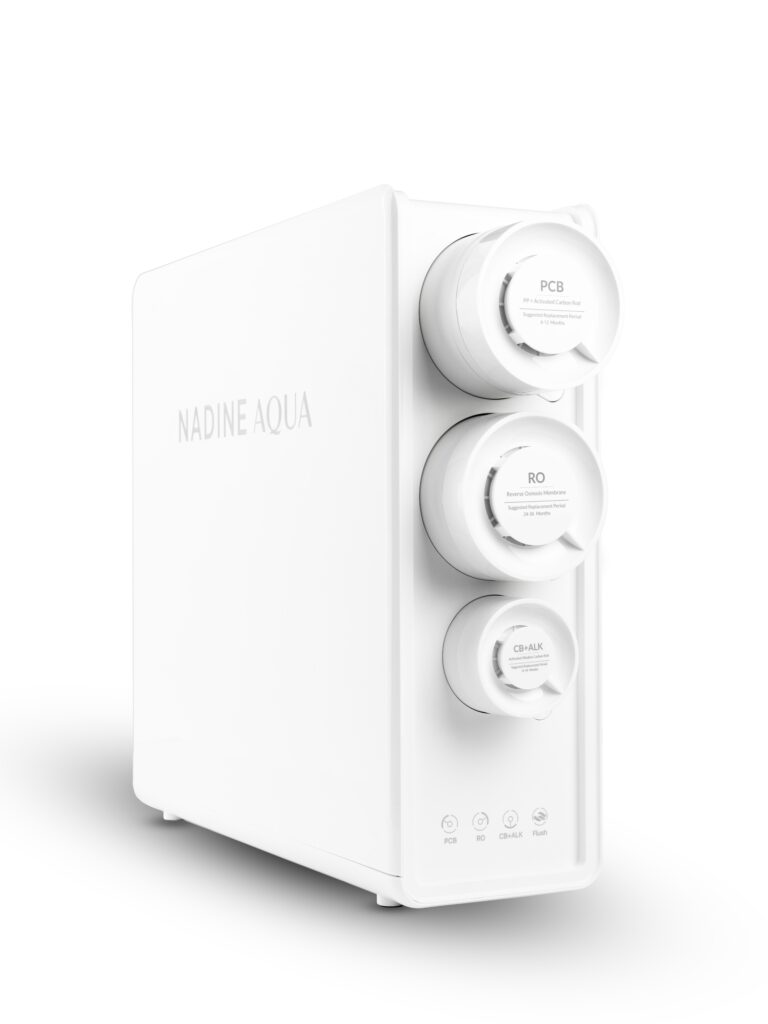
Tankless RO systems filter water on demand rather than storing it in a large tank. A pump and an RO membrane let the system make purified water as you need it. The rated production capacity tells you how much it can generate under specified conditions.
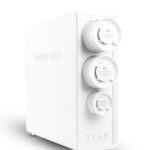
Nadine Aqua makes compact, British-designed tankless systems with multi-stage filtration. Ours use 11 stages, each aimed at a different kind of impurity, so the water gets a more thorough clean overall. Depending on the system, you may also get UV sterilisation, alkaline and mineral enhancement, digital monitoring, and a dual water outlet.
Each feature does a different job. The RO membrane reduces many dissolved contaminants, and the other filtration stages deal with impurities the membrane doesn’t. Mineral enhancement puts selected minerals back after filtering. On models that have it, UV treatment adds one more stage to control microbes.
A tankless system means you’re less reliant on stored water, and it frees up cupboard space. It won’t give you unlimited water instantly, though. What comes out of the tap depends on the system’s capacity, your incoming water, and how it’s operating.
Under-Sink RO Systems for UK Kitchens: Which Takes Up Less Space?
Under-sink space is often limited in UK kitchens. Waste pipes, plumbing connections, kitchen bins and cleaning products may already occupy much of the available cupboard.
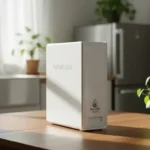
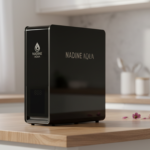
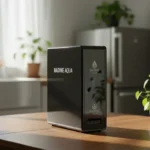
Nadine Aqua states that its compact tankless systems can save up to 70% of under-sink space compared with traditional tank-based systems. Removing the need for a large storage tank can make it easier to organise the remaining space and access everyday kitchen essentials.
This can be particularly useful when renovating a kitchen or fitting a purifier into a small flat. You have more flexibility when planning cupboard storage and positioning the filtration unit around existing plumbing.
Before choosing a water filtration system, check its dimensions and allow room for water connections, drainage, any required power supply and routine filter replacement. A compact unit is only practical if it can be installed and maintained without obstructing other fittings.
Water Production and Flow Rate Compared
A traditional RO system supplies water from its storage tank. The supply is available immediately while sufficient water remains in the tank, but the system needs time to replenish it after heavy use.
A tankless system produces water as it flows through the filtration unit. Its rated production capacity helps indicate whether it can meet your household’s demand over time.
Nadine Aqua offers tankless systems with different production capacities, including residential and higher-demand options. These capacities are expressed in gallons per day (GPD). A higher GPD rating indicates greater nominal daily production under specified test conditions, but it does not directly tell you the exact flow rate at the tap.
For a household that frequently fills bottles, cooks with purified water and prepares several hot drinks throughout the day, a suitably rated tankless system may be convenient. However, actual delivery depends on factors such as water pressure, temperature and system performance.
If you live alone or use filtered water only occasionally, a traditional system may provide sufficient water without requiring a higher-capacity unit. Consider your daily usage rather than choosing a system based on its GPD rating alone.
Wastewater and Running Costs: What Should You Expect?
All RO systems produce wastewater as part of the filtration process. As water passes through the RO membrane, some flows to the drain, carrying away concentrated dissolved substances. The amount depends on the system’s design, incoming water quality and operating conditions.
If your home has a water meter, this additional water consumption can affect your bill. Ask the supplier for the system’s pure-to-drain ratio and check how it was measured. Nadine Aqua’s product information lists a 3:1 pure-to-drain ratio for its specified systems. Confirm the applicable ratio for the system you choose and compare figures measured under similar conditions.
Filter replacement is another ongoing expense. With Nadine Aqua systems, the PCB and CB filters usually need replacing every 12 to 18 months, and the RO membrane generally lasts 18 to 24 months. Your own intervals can run shorter or longer depending on your water quality, how much you use it, and how well it’s maintained.
Before you buy, ask what the replacement filters and membrane cost, and whether any servicing is recommended. Set those figures next to the purchase price and the wastewater the system produces, and you’ll have a much clearer idea of what it really costs to own over the years.
Does Hard Water in the UK Affect Your Choice?
Hard water is common across much of England. It carries more dissolved minerals, mainly calcium and magnesium, and that’s what leaves limescale on kettles, taps, and appliances.
It’s worth thinking about the water coming into your home when you choose an RO system, because it can change how well the system filters and how much upkeep it needs. Pre-filtration protects the RO membrane by catching impurities before the water reaches it. Exactly how much treatment you need depends on your water supply and the system’s design.
Nadine Aqua’s multi-stage filtration systems are designed to treat water through a combination of filtration stages. Selected systems also include alkaline and mineral enhancement after filtration.
RO treatment can reduce many dissolved substances, including minerals associated with water hardness. However, a drinking-water purifier beneath the sink is not a whole-house water-softening system and should not be expected to prevent limescale throughout the property.
If you’re concerned about a particular contaminant, check the system’s specifications and available test evidence to confirm that it is designed to reduce it.
Are Tankless RO Systems Suitable for Renters and Small Flats?
Tankless systems can be a practical option for smaller kitchens because they do not require a large storage tank. This can make it easier to fit a purifier beneath the sink without sacrificing as much cupboard space.
Installation requirements still matter. Some systems need a connection to the water supply and drain, along with an electrical socket. If you rent your property, check your tenancy agreement and obtain the landlord’s approval before making plumbing changes or replacing the kitchen tap.
Nadine Aqua offers a three-way faucet option that combines hot, cold and purified water through one tap, using separate internal channels. Where the compatible installation allows it, this can avoid the need for an additional drinking-water tap or a separate hole in the worktop.
Confirm compatibility and installation requirements before purchasing, as not every configuration will suit every kitchen.
So, Which RO System Is Better for Your Kitchen?
A tankless RO system may suit you if under-sink space is limited, your household uses purified water frequently or you want to avoid relying on a large storage tank. It can also offer additional features such as digital monitoring, UV treatment and mineral enhancement, depending on the system selected.
A traditional tank-based system may be sufficient if you have plenty of cupboard space, use relatively little filtered water and prefer a system that stores purified water for immediate use.
Neither option is automatically better for every household. Compare filtration capabilities, rated production, actual water delivery, wastewater, maintenance costs and installation requirements before making a decision.
Nadine Aqua’s tankless range combines compact designs with multi-stage filtration and selected additional features. The most suitable configuration will depend on your household’s water consumption, the features you need and the space available beneath your sink.
Want Help Choosing the Right RO System?
Choosing a water filtration system takes more than comparing filtration stages or production ratings. Your kitchen layout, how much water you use each day, the quality of the water coming in, and your maintenance budget all change which system suits you best.
Visit Nadine Aqua UK to look through the tankless water filtration systems, or ask for help choosing one for your home.
Frequently Asked Questions About RO Systems for UK Kitchens
What makes Nadine Aqua’s tankless RO systems suitable for UK kitchens?
Nadine Aqua’s water filtration systems are built to save under-sink space compared with traditional tank-based systems. You get multi-stage filtration in a compact design, so they’re worth a look if you have a smaller kitchen, or a household that wants purified water without a big storage tank.
Do Nadine Aqua water purifiers remove minerals from tap water?
Reverse osmosis cuts down many dissolved substances, minerals included. Nadine Aqua offers water filtration systems with alkaline and mineral enhancement, which add selected minerals back in after filtration. Check the specifications of the system you pick to see which features it has.
Do all Nadine Aqua tankless systems include UV sterilisation?
No. UV sterilisation comes on selected systems, so don’t assume it’s across the whole range. Look at the specifications of the one you’re considering to confirm whether UV treatment is included.
How often do Nadine Aqua filters need replacing?
The PCB and CB filters in our systems usually need replacing every 12 to 18 months. The RO membrane generally lasts 18 to 24 months. Your actual intervals depend on the incoming water quality, how much you use it, and how well it’s maintained, so follow the recommendations for your specific system.
How much wastewater do Nadine Aqua RO systems produce?
Nadine Aqua’s UK product information lists a 3:1 pure-to-drain ratio for specified systems. Confirm that it applies to the configuration you choose, and ask what conditions it was measured under. That helps you estimate water use when you compare RO systems.
Can I install a Nadine Aqua purifier in a rented flat?
A tankless design helps where under-sink space is tight. Installation can still involve plumbing, drainage, an electrical connection, or a compatible tap, though. If you rent, read your tenancy agreement and get your landlord’s approval before you change anything.
Does Nadine Aqua offer a tap for both regular and purified water?
Yes, there’s a three-way faucet option that gives you hot, cold, and purified water through one tap, each on its own channel. Check that it’s compatible with your chosen system and your kitchen setup before installation.
How do I choose the right Nadine Aqua water filtration system?
Think about the space under your sink, how much purified water your household uses, which filtration features you need, and what replacement filters will cost over time. Compare the specifications of the available systems, or contact Nadine Aqua and ask for help finding one that suits your kitchen.