What Contaminants Can a Reverse Osmosis Water Filter Remove?
Before spending money on an RO system, it’s fair to ask exactly what you’re paying for. Tap water in the UK looks clear, but that doesn’t mean it’s free of things you’d rather not drink. We hear this question from UK homeowners all the time, and honestly, it deserves a straight answer, not a vague list of buzzwords. Here’s exactly what contaminants can a reverse osmosis water filter remove, stage by stage.
Sediment and Rust: The First Contaminants an RO System Tackles
Before water ever reaches the RO membrane, it passes through sediment filters. These catch sand, rust particles, and general grit that can travel through older pipe networks common across UK homes. This step doesn’t just clean the water, it protects the more delicate membrane downstream from damage and premature clogging.
Chlorine, Pesticides, and Taste Issues Removed by Carbon Filtration
Carbon filtration stages handle a different category of problem entirely. They pull out chlorine, which utility companies add to keep water safe during treatment, along with trace pesticides and volatile compounds that affect taste and smell. This is why filtered water often tastes noticeably cleaner than water straight from the tap.
Heavy Metals: Lead, Fluoride, and What the RO Membrane Removes
The RO membrane is where the real filtration happens. Water gets pushed through a membrane fine enough to block dissolved heavy metals, including lead, along with excess fluoride. Our systems are built specifically as a lead and fluoride removal water filter at this stage, addressing two contaminants that older pipe systems in many UK properties can still introduce.
PFAS and Emerging Chemical Contaminants in UK Tap Water
Newer concerns around water quality have shifted toward PFAS, a group of man-made chemicals found in some UK water supplies due to industrial and agricultural runoff. Our systems function as a PFAS removal water filter, targeting these substances specifically. This matters because standard carbon filtration alone often isn’t sufficient to catch these particular compounds.
Bacteria and Viruses: Where UV Filtration Adds Extra Protection
Some of our models include a UV LED water purifier stage after the membrane. UV light disrupts the DNA of bacteria and viruses that might still be present, adding a final layer of protection. This step matters especially for older properties where water storage or aging pipework can introduce microbial risks.
What an RO Water Filter Removes vs What Stays in Your Water
It’s worth being clear about what remains after filtration too. RO systems remove dissolved minerals along with contaminants, which is why quality systems reintroduce healthy minerals afterward through a mineralized process. This keeps water tasting balanced instead of flat, giving you reverse osmosis water filtration in the UK that’s both thoroughly cleaned and genuinely pleasant to drink.
Why UK Households Choose Nadine Aqua for Complete Filtration
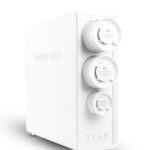
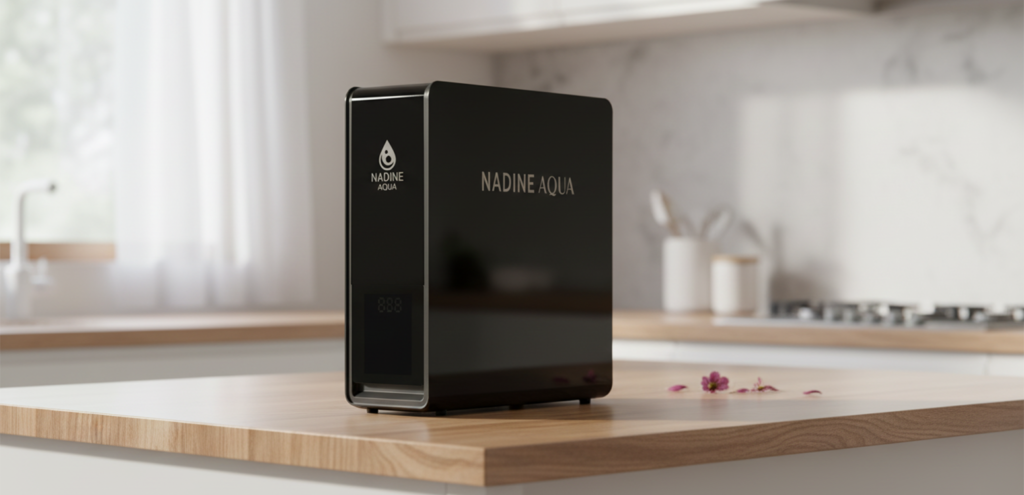
We built our systems around this exact question, what does an RO water filter remove, and made sure the answer covers real, common UK water concerns. Our 11-stage advanced water filtration setup combines sediment removal, carbon filtration, membrane filtration, and UV sterilization in one compact under-sink unit. It fits neatly into standard cabinets while handling far more than a basic filter jug ever could.
If you’re ready to know exactly what’s coming out of your tap, explore Nadine Aqua’s RO systems built for UK homes and see the difference proper multi-stage filtration makes.
Frequently Asked Questions
Does reverse osmosis remove all bacteria from tap water?
The RO membrane blocks the vast majority of bacteria due to its extremely fine filtration surface, but systems with an added UV sterilization stage provide more complete protection. That combination goes after any microorganisms that might otherwise slip through, which is exactly why UV-equipped RO systems tend to be the stronger pick if you’re worried about microbial contamination.
Can an RO filter remove microplastics from drinking water?
Yes, it can. The RO membrane’s filtration is fine enough to catch microplastic particles along with other dissolved and suspended contaminants. Microplastics have become more of a concern in water supplies generally these days, and that’s actually one of the reasons reverse osmosis has become such a go to option for households that want thorough contaminant removal.
Does an RO system remove nitrates from tap water?
It does, reverse osmosis membranes are pretty effective at bringing nitrate levels down, which matters if you’re near agricultural land where fertilizer runoff can seep into the local water supply. That’s why RO filtration tends to be especially useful for UK households out in rural or farming areas, where nitrate levels in tap water often run higher than average.
Is there anything an RO water filter cannot remove?
There are a few things, yes. Dissolved gases like radon, for instance, can sometimes get through membrane filtration. That said, it’s not really a common issue in typical UK tap water. Still, worth knowing that RO systems handle the vast majority of contaminants, they’re just not claiming to catch literally everything in every possible scenario.
How do I know if my tap water has contaminants an RO filter would remove?
Your regional water supplier puts out local water quality reports that list what’s actually been detected in your area, chlorine levels, nitrates, metals, that sort of thing. Stack that up against what reverse osmosis water filtration in the UK is built to remove, and you’ll get a pretty clear picture of how useful an RO system would actually be for your household.